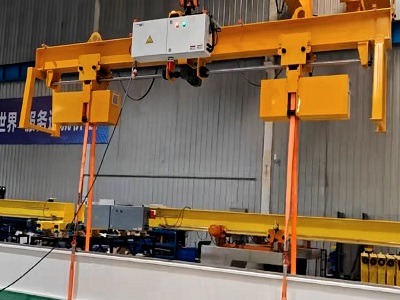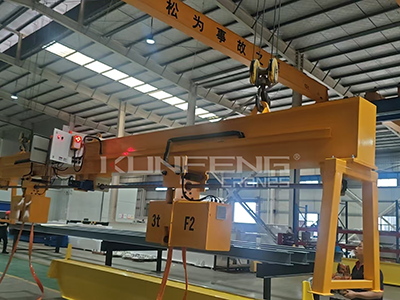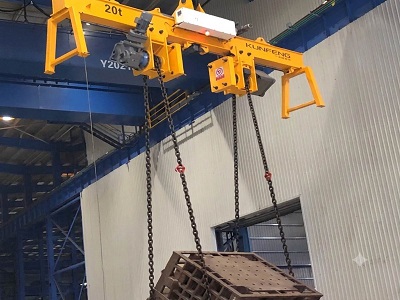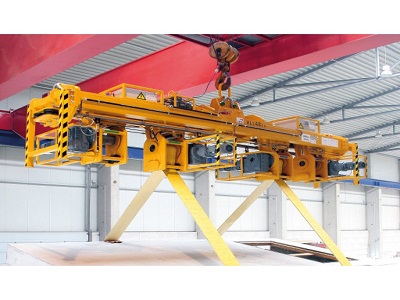
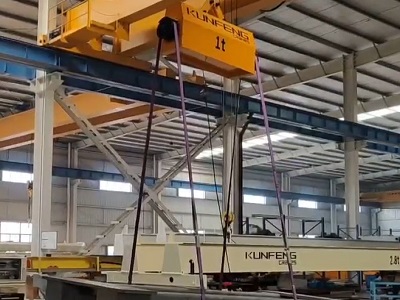
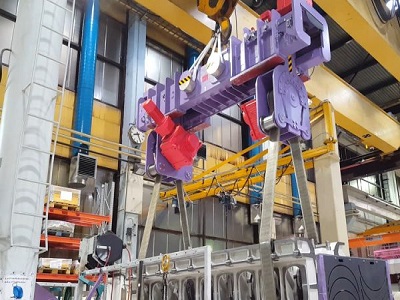
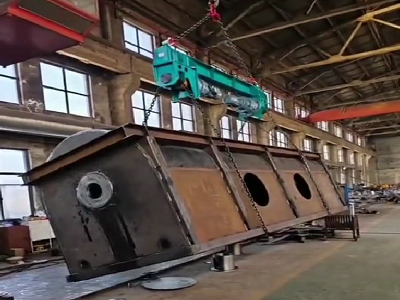
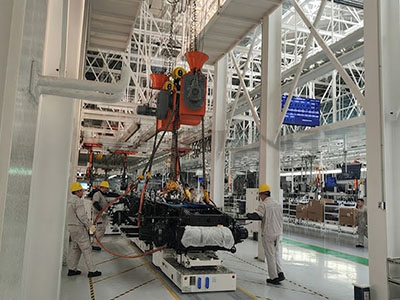
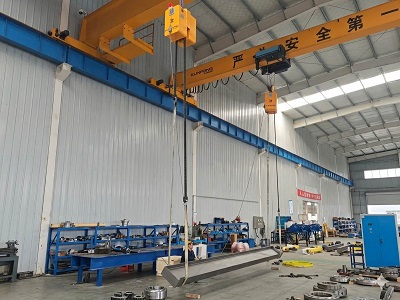
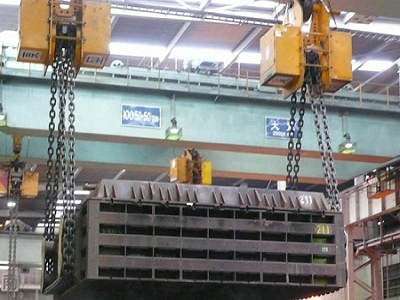
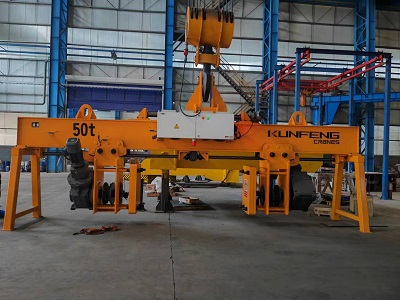
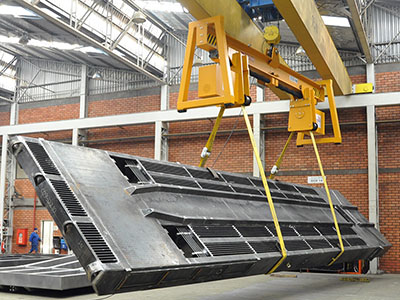
In many steel fabrication and heavy manufacturing facilities, operators frequently need to lift and rotate steel beams and heavy workpieces. To perform this task without overhead cranes, factories increasingly rely on dedicated Steel Beam Rotators. While not all production workshops are equipped to install overhead bridge cranes, other facilities make a conscious choice to avoid them for safety and efficiency reasons. For these enterprises, safely lifting and rotating heavy loads using floor-mounted steel beam rotators solves a critical engineering challenge.
Key Reasons Workshops Avoid Overhead Cranes for Workpiece Rotation
Before exploring alternatives, it is essential to understand why certain facilities choose to forgo or limit crane usage:
Building Limitations: Older plants or rented workshops often have low ceilings, with overhead beams unable to support the load of suspended cranes and heavy workpieces. In addition, complex networks of overhead pipes and cables may leave no room for crane runway tracks.
Lifting Hazards: Flipping heavy objects with a crane using slings or chains leaves the workpiece susceptible to violent swinging or sudden shift of center of gravity. This significantly increases the risk of sling slippage, cable snapping, or drop accidents. Consequently, many high-standard facilities strictly prohibit overhead suspended load operations.
Production Bottlenecks: Overhead cranes are typically shared resources across an entire shop floor. Relying on them repeatedly for workpiece rotation and positioning causes prolonged waiting times on the production line, creating a severe bottleneck in throughput.
Surface Scratches: For high-precision machined parts, pre-painted assemblies, or fragile castings, traditional crane wire ropes and hooks can easily scratch or damage workpiece surfaces during rotation.
Welding Violations: Many heavy components require immediate welding or grinding after rotation. However, welding while a workpiece is suspended from a crane is strictly forbidden—oscillation impairs weld quality, while welding sparks and high heat risk damaging lifting gear and causing drop accidents. Furthermore, working beneath suspended loads directly violates fundamental safety regulations.
Safer, Ground-Mounted Beam Rotation Without Overhead Cranes
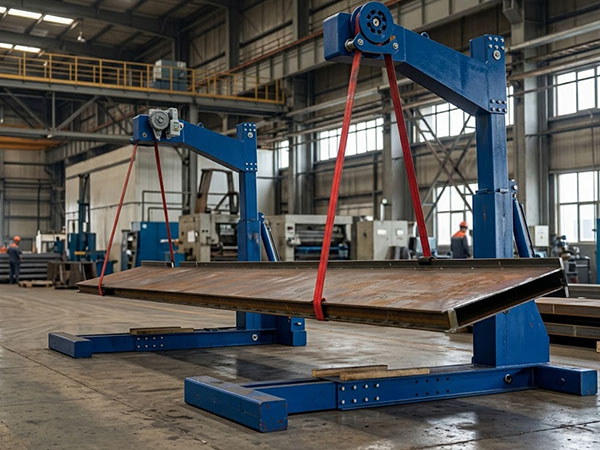
To eliminate reliance on overhead cranes, dedicated Floor-Mounted Steel Beam Rotators have become standard equipment in modern steel structure fabrication shops.
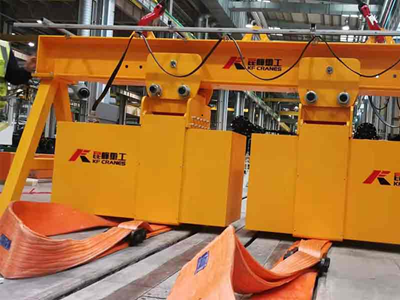
Installed or placed directly on the shop floor, floor-mounted steel beam rotators eliminate any dependency on roof beams or building structures. They utilize high-strength, wear-resistant continuous sling loops (rope/chain loops) or motor-/hydraulic-driven rollers to form an integrated turning system.
Key Advantages of Floor-Mounted Beam Rotators:
Stable Rotation for Safe Welding: The steel beam sits securely within the rotator’s continuous chain or sling loops, keeping its center of gravity within the machine base. Once flipped to any desired angle, the device provides mechanical lock-in. Welders can perform high-quality downhand welding next to an exceptionally stable workpiece, completely eliminating the hazards of working under suspended loads.
No Waiting for Cranes: As dedicated station equipment, floor-mounted rotators handle turning operations independently during assembly, welding, and grinding. Eliminating the need to wait for shared shop cranes dramatically frees up overhead crane capacity and streamlines production line takt times.
Safe Coating Protection: Designed with high-strength flexible composite slings or padded chains, professional rotators prevent impact damage and scratches to beam flanges, sharp edges, and anti-corrosion coatings, substantially reducing rework.
Flexible Shape Fitting: Whether handling H-beams, I-beams, box girders, or asymmetrical structural shapes, ground-mounted steel beam rotators easily accommodate various profiles by adjusting loop spacing and tensioning.
For steel fabrication facilities committed to strict safety standards, lean manufacturing, and superior weld quality, transitioning away from high-risk overhead crane flips toward Floor-Mounted Steel Beam Rotators represents a high-return investment. It solves physical building constraints regarding hook height and load capacity while establishing a safer, more efficient manufacturing environment free from suspended-load hazards.